
Introduction
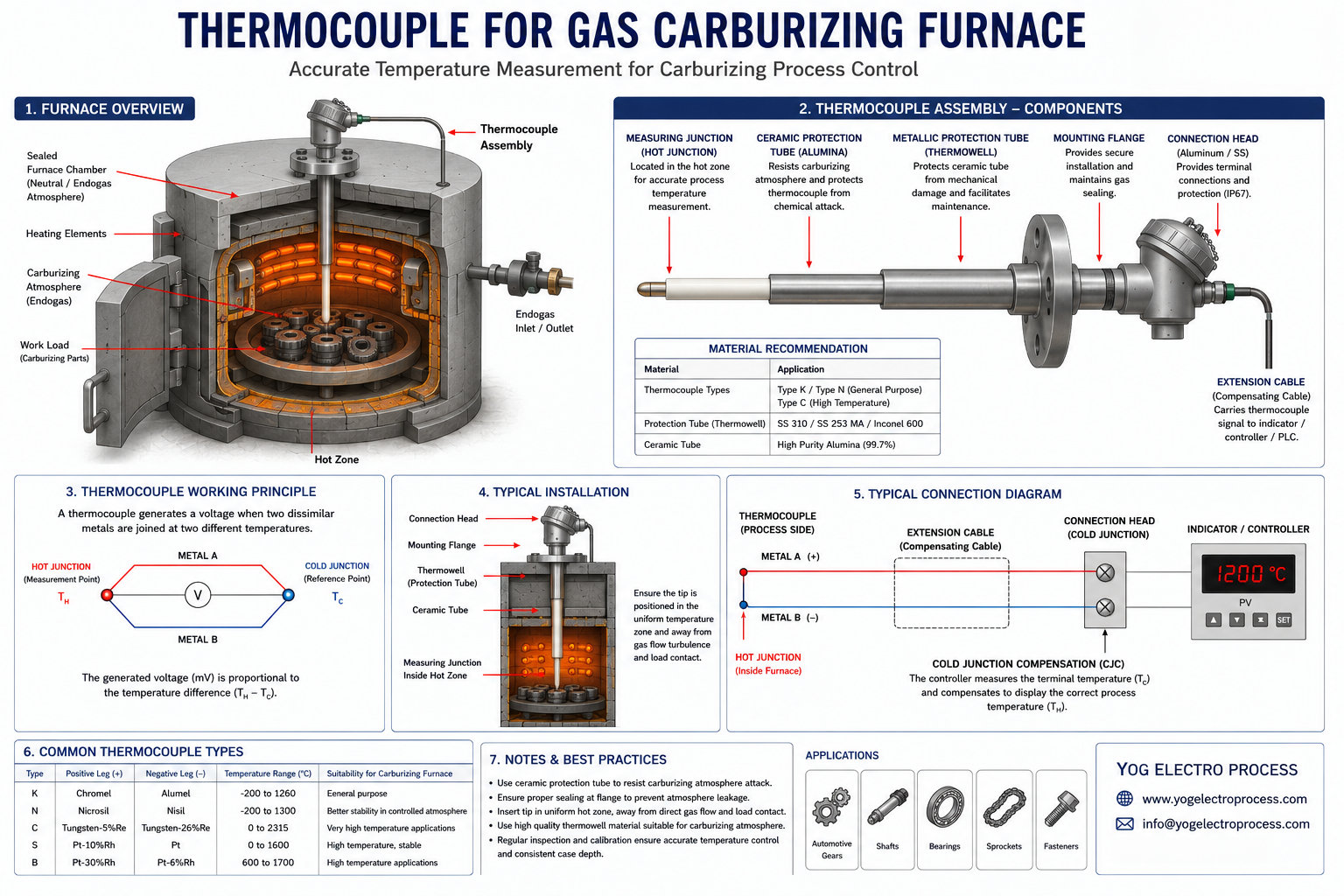
Gas carburizing requires controlled temperature while carbon potential is managed to develop the intended case. A thermocouple that drifts or responds slowly can undermine a process even when the controller appears stable.
The carbon-rich atmosphere, soot, furnace circulation and repeated heat cycles make protection material and sensor placement central to the design.
Process Context
Carburizing furnaces may include heating, diffusion and quench-related stages. Control and over-temperature sensors must represent the working zone while remaining protected from load contact and atmosphere attack.
Carbon ingress and contamination can change thermoelement behavior. Deposits can also alter heat transfer around a protection tube, causing a reading to lag or differ from the actual workload environment.
Selection Guidance
Type N is often considered where long-term high-temperature stability is valuable; Type K remains widely used. Noble-metal types may suit selected high-temperature or accuracy-critical duties with compatible protection.
Review atmosphere compatibility of sheath, insulation and protection tube. Sensor calibration history and replacement intervals should be based on observed drift rather than a generic calendar alone.
Recommended Sensors
Type N mineral-insulated sensor
A stable base-metal option for selected high-temperature furnace-control duties.
Type K heavy-duty assembly
A practical general-purpose choice when its temperature and atmosphere limits are respected.
Type S with ceramic protection
For selected higher-temperature duties requiring noble-metal stability.
Installation Considerations
Position the control junction in representative furnace circulation, clear of the load and heating elements. Keep the over-temperature sensor independent where the control philosophy requires it.
Seal entry points to limit atmosphere leakage and protect terminals from furnace gases. During maintenance, inspect deposits, insulation resistance, sheath condition and any change in installed depth.
Key Benefits
- Supports stable carburizing and diffusion temperatures.
- Reduces hidden error from atmosphere-driven drift and contamination.
- Improves maintenance decisions through condition-based checks.
- Protects process repeatability with documented sensor position.
Specifications
| Design item | Typical options |
|---|---|
| Process zones | Heating, carburizing, diffusion and over-temperature protection |
| Thermocouple types | K, N or S according to duty |
| Typical process range | 750°C to 1050°C; confirm furnace cycle |
| Protection | Atmosphere-compatible alloy or ceramic protection system |
| Maintenance focus | Drift trend, soot buildup, seal condition and insertion repeatability |
Frequently Asked Questions
Why do thermocouples drift in carburizing furnaces?
High temperature, carbon-rich atmosphere, contamination, thermoelement aging and insulation changes can all shift output over time.
Is Type N better than Type K for carburizing?
Type N can offer improved stability in some high-temperature applications, but the atmosphere, protection system, controller input and plant history determine the better choice.
Does soot affect the reading?
Deposits can change heat transfer and response around the protection tube. Heavy buildup may also indicate atmosphere or circulation issues that deserve investigation.
Should control and over-temperature sensors be separate?
Many safety philosophies require independent sensing and instrumentation. The furnace design and applicable requirements should determine the arrangement.
References
Need an engineered solution?
Speak with our technical specialists to design a sensor assembly perfectly matched to your application requirements.
Contact Engineering Team