
Introduction
Measuring the temperature of molten aluminium presents distinct metallurgical and mechanical challenges. Aluminium is highly reactive in its liquid state and actively attacks and dissolves many standard metallic protection tubes, leading to rapid sensor failure and process contamination.
Accurate temperature control is paramount. Pouring aluminium too cold leads to incomplete casting fills and structural defects, while excessive superheating increases energy consumption, accelerates refractory wear, and dramatically increases the formation of dross and porosity due to hydrogen absorption.
Process Context
Aluminium processing utilizes a variety of furnace types, including gas-fired reverberatory furnaces, crucible furnaces, and electric induction furnaces. The measurement strategy must account for whether the sensor is used for continuous monitoring in a holding bath or intermittent spot-checking (dip measurement) during pouring.
Continuous immersion exposes the sensor to prolonged chemical attack, mechanical shock from charging solid ingots, and the abrasive action of fluxing and dross removal. Alternatively, dip measurement requires rapid response times to minimize the operator's exposure to the radiant heat of the open melt.
Selection Guidance
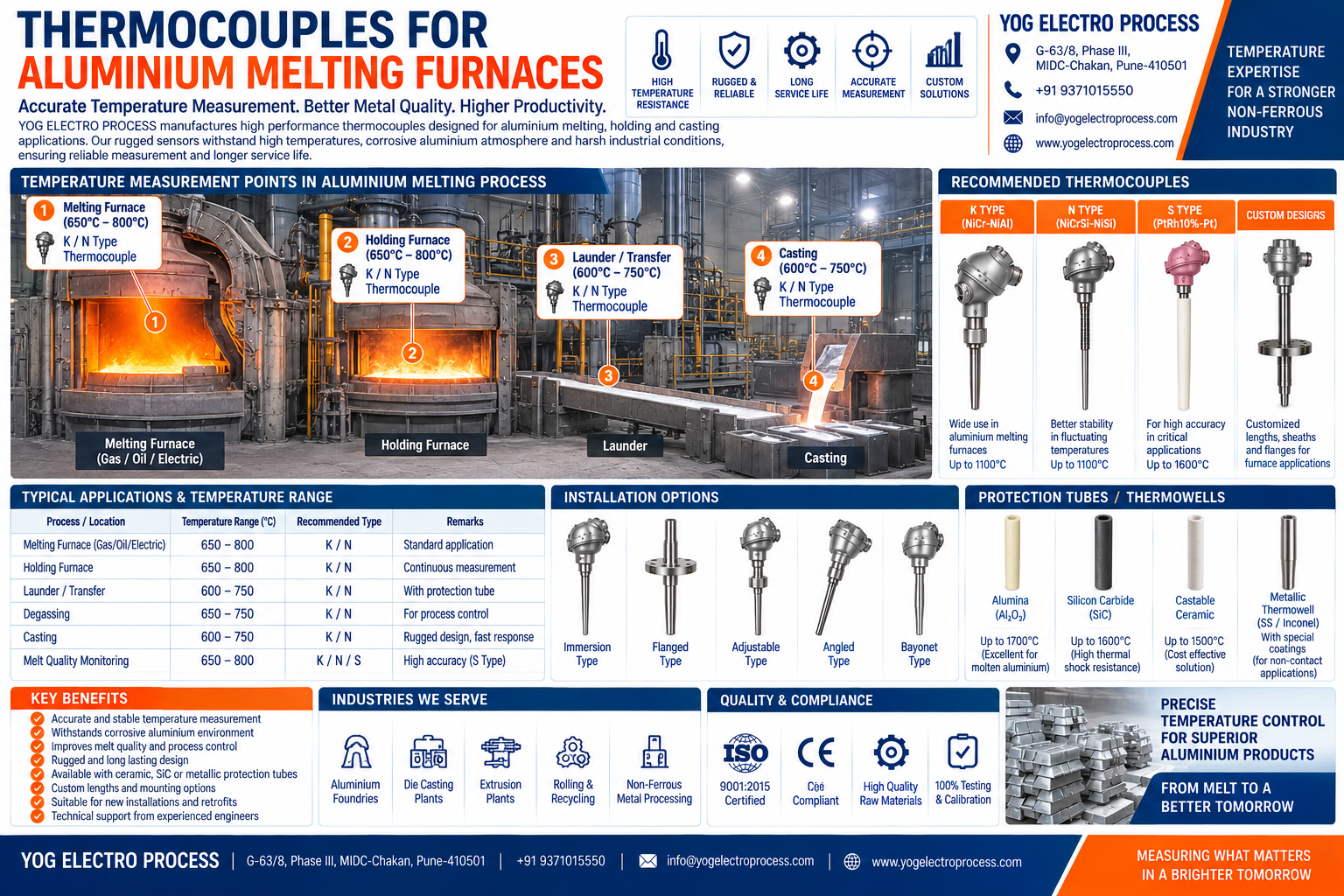
For continuous immersion, the protection tube is the most critical element. Cast iron or standard stainless steel tubes will dissolve rapidly unless treated with specialized non-wetting coatings (which require frequent reapplication). Solid silicon carbide (SiC), silicon nitride (Si3N4), or specialized Sialon tubes are the industry standards, offering excellent thermal shock resistance and immunity to aluminium attack.
Inside the protective tube, Type K (Chromel/Alumel) or Type N (Nicrosil/Nisil) thermocouples are standard, as aluminium melting temperatures (typically 700°C to 800°C) fall comfortably within their optimal range. Type N is increasingly preferred for continuous applications due to its superior long-term stability and resistance to oxidation.
Recommended Sensors
Silicon Nitride / Sialon Protected Thermocouples
The premier choice for continuous immersion. Completely non-wetting to aluminium, offering exceptional lifespan and eliminating the need for daily coating maintenance.
Cast Iron Tubes with Non-Wetting Wash
A traditional, cost-effective solution for less aggressive holding applications, though it requires rigorous, regular maintenance (recoating) to prevent dissolution.
Portable Foundry Dip Probes
Lightweight, rapid-response lance assemblies used for quick spot-checks in the ladle or crucible before pouring.
Installation Considerations
Thermal shock is the primary cause of ceramic tube failure. Silicon carbide and silicon nitride tubes must be pre-heated above the bath temperature or inserted extremely slowly (e.g., a few inches per minute) to allow internal stresses to equalize before full immersion.
Position the sensor carefully to avoid direct impact from heavy ingots during furnace charging. Ensure the sensor head is kept away from direct flame impingement and that the cold junction temperature remains below the rating of the terminal block and extension wire.
Key Benefits
- Prevents excessive hydrogen absorption and dross formation by eliminating unnecessary superheating.
- Eliminates melt contamination from dissolved iron by using non-wetting ceramic tubes.
- Reduces consumable costs and maintenance downtime compared to frequently replacing degraded metallic tubes.
- Ensures consistent casting fluidity and metallurgical quality.
Specifications
| Parameter | Typical Specification |
|---|---|
| Operating Range | 650°C to 850°C (Molten Aluminium) |
| Thermocouple Type | Type K (Standard) or Type N (Preferred for stability) |
| Continuous Protection Tube | Silicon Nitride, Sialon, or coated Cast Iron |
| Dip Probe Construction | Bare or lightly shielded tip for < 15 second response |
| Junction Style | Ungrounded (especially critical in induction furnaces) |
Frequently Asked Questions
Why can't I use a standard stainless steel thermowell in molten aluminium?
Molten aluminium is an excellent solvent for other metals. It will rapidly attack, dissolve, and ultimately breach standard stainless steel or Inconel thermowells, destroying the sensor and contaminating your melt with iron.
Is Type K or Type N better for aluminium?
While Type K is historically standard, Type N is technically superior for this temperature range. Type N resists 'green rot' (preferential oxidation) and exhibits significantly less thermoelectric drift over time compared to Type K.
How long should a Silicon Nitride tube last?
With proper handling—specifically avoiding mechanical impact during charging and managing thermal shock during insertion—a high-quality Silicon Nitride or Sialon tube can last 12 to 24 months in continuous immersion.
Do I need to coat a Silicon Nitride tube?
No. Unlike cast iron tubes, Silicon Nitride and Sialon are inherently non-wetting to liquid aluminium and do not require daily protective washes or coatings.
References
Need an engineered solution?
Speak with our technical specialists to design a sensor assembly perfectly matched to your application requirements.
Contact Engineering Team